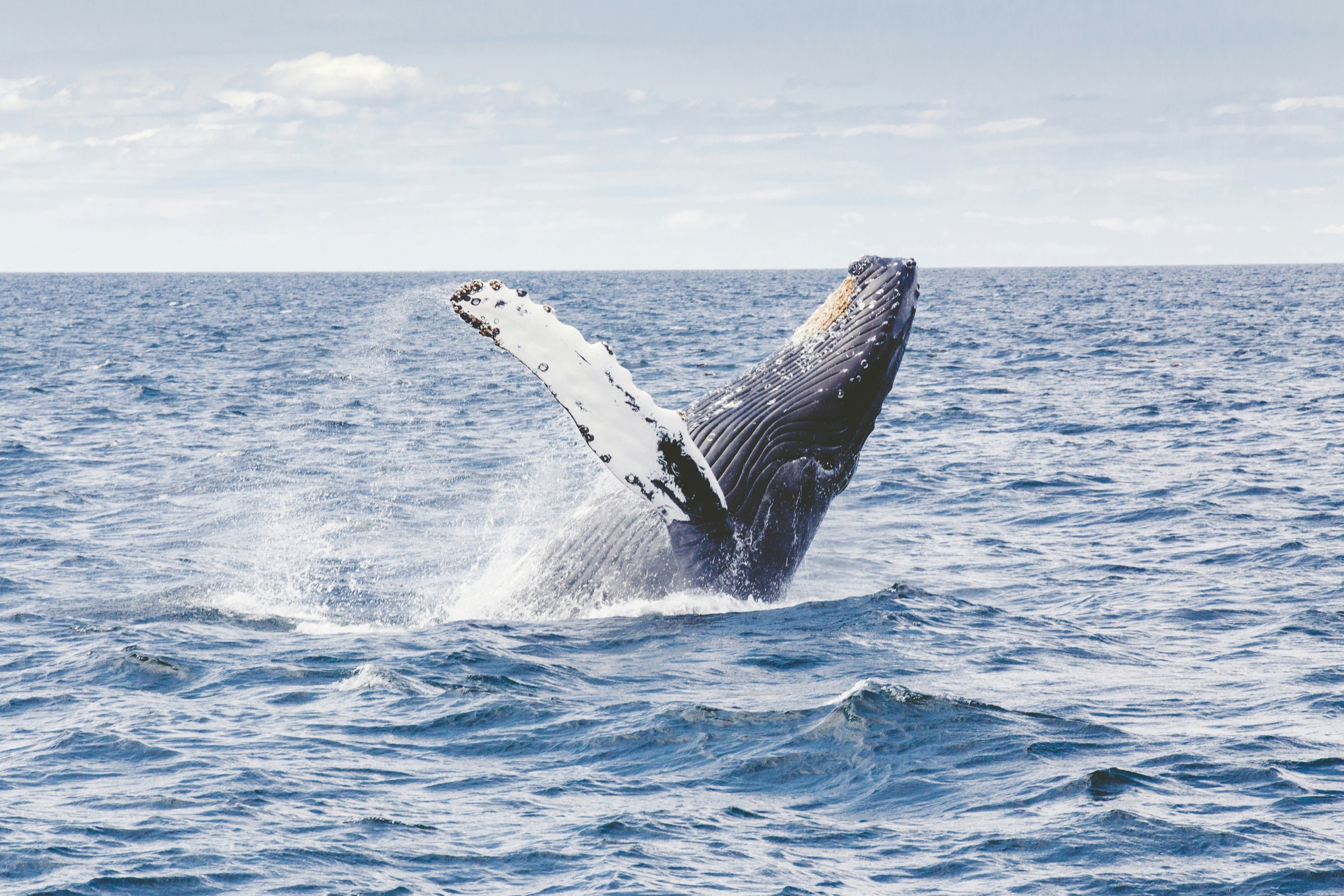
2024 年 11 月,发表于《科学》杂志的一项全球性研究首次系统绘制了鲸类与船舶碰撞的全球风险地图。结论令人震惊:只需对全球 2.6% 的海洋面积实施保护,就能覆盖蓝鲸、鳍鲸、座头鲸和抹香鲸四个物种的所有高风险碰撞热点。
In November 2024, a global study published in Science mapped the worldwide risk of whale–ship collisions for the first time. The conclusion was striking: protecting just 2.6% of the world's oceans would cover every high-risk collision hotspot for blue whales, fin whales, humpbacks and sperm whales.
研究背景
Background
船撞事件长期以来只在局部或区域尺度上被研究,大范围的全球风险分布至今仍不清楚。研究团队将来自 43.5 万次独立鲸类目击记录,与 17.6 万艘货船 2017 至 2022 年间的 AIS 自动识别系统轨迹数据相结合,系统评估了四个物种在全球范围内与船舶相遇的风险分布。这是迄今为止规模最大的船撞风险全球评估研究。
For decades, ship strikes have been studied only at local or regional scales — the global pattern of risk has remained unclear. The research team combined 435,000 individual whale sightings with AIS automatic-identification tracks from 176,000 cargo vessels covering 2017–2022, systematically assessing the encounter risk facing four species worldwide. It is the largest global ship-strike risk assessment to date.
"船撞事件通常只在局部或区域层面被研究——比如美国东西海岸——大范围的风险规律至今仍不清楚。我们的研究试图填补这些知识空白,在全球层面理解船撞风险。"
"Ship strikes have typically only been studied at local or regional scales — like the U.S. East and West coasts. The broader picture of risk has remained unclear. Our work aims to fill those gaps and understand ship-strike risk globally."
Anna Nisi · 研究第一作者,华盛顿大学博士后研究员 Anna Nisi · Lead author, postdoctoral researcher, University of Washington核心发现
Core Findings
研究发现,全球航运交通与上述四个物种 92% 的栖息范围存在重叠。研究人员随后筛选出各物种碰撞风险位于前 1% 的高风险热点区域,分析其地理分布和当前保护状况。
The study found that global shipping traffic overlaps with 92% of the four species' habitat. Researchers then identified the top 1% of collision-risk areas for each species and analyzed their geography and current protection status.
研究识别出的高风险热点主要集中在以下区域:
The high-risk hotspots cluster in a small number of regions:
- 地中海 — 法国、意大利和西班牙沿岸,Pelagos 保护区核心地带
- Mediterranean — coasts of France, Italy and Spain; the core of the Pelagos Sanctuary
- 印度洋 — 斯里兰卡南部,蓝鲸觅食地与主干航线完全重合
- Indian Ocean — southern Sri Lanka, where blue whale feeding grounds align exactly with the main shipping lane
- 东北太平洋 — 美国加州海岸,蓝鲸和座头鲸迁徙廊道
- Northeast Pacific — California coast, blue whale and humpback migration corridors
- 好望角 — 南非附近,连接大西洋与印度洋的高密度航线
- Cape of Good Hope — South Africa, dense lanes connecting the Atlantic and Indian Oceans
- 东南亚 — 马六甲海峡及周边,全球最繁忙航运节点之一
- Southeast Asia — the Strait of Malacca and surroundings, one of the world's busiest shipping nodes
重要的是,超过 95% 的船撞热点位于各国专属经济区内,即距海岸 200 海里以内的海域。这意味着每个沿海国家都具备在本国管辖水域内单独实施保护措施的法律权力,无需等待国际条约层面的统一行动。
Critically, more than 95% of ship-strike hotspots fall inside national Exclusive Economic Zones (EEZs) — within 200 nautical miles of shore. That means every coastal nation already holds the legal authority to act unilaterally inside its own waters, without waiting for an international treaty.
"从保护的角度来看,大多数高风险区域位于专属经济区内,
这实际上是令人鼓舞的——
这意味着各国有能力保护风险最高的区域。"
"From a conservation perspective, most of the high-risk areas are within EEZs — which is actually encouraging.
It means countries have the ability to protect the highest-risk zones."
保护措施的缺位
The Protection Gap
研究同时揭示了保护现状与实际需求之间的巨大落差。强制性减速区等保护措施极为罕见:
The study also revealed an enormous gap between current protection and what the data demand. Mandatory slowdown zones are vanishingly rare:
| 物种 | Species | 强制保护覆盖率 | Mandatory Coverage |
|---|---|---|---|
| 蓝鲸 | Blue whale | 0.54% | |
| 座头鲸 | Humpback whale | 0.27% | |
| 鳍鲸 | Fin whale | 0% | |
| 抹香鲸 | Sperm whale | 0% |
许多高风险热点虽然位于现有的海洋保护区内,但这些保护区大多设立的初衷是限制捕鱼和工业污染,并未对船舶航速作出规定,因此对船撞威胁几乎没有实质性保护效果。
Many high-risk hotspots do fall within existing marine protected areas — but most of those reserves were created to limit fishing or industrial pollution, not vessel traffic. They impose no speed regulations on ships, and offer almost no real protection against strikes.
可行的解决方案
What Actually Works
研究团队提出了两类主要缓解手段:
The researchers identified two main mitigation strategies:
减速 — 将船速降至 10 节,给鲸类更多时间下潜或游离危险区域,致死概率从 79% 降至约 20%。
Slowdown. Dropping vessel speed to 10 knots gives whales more time to dive or move clear; lethal-strike probability falls from 79% to roughly 20%.
改道 — 调整航线绕开鲸类密集区,从源头降低相遇概率。斯里兰卡航线南移 15 海里可降低 95% 碰撞风险,已有科学验证。
Re-routing. Moving lanes away from whale-dense waters cuts encounter probability at the source. Shifting Sri Lanka's lane 15 nautical miles south reduces collision risk by 95% — a result already verified by independent science.
降低船速还带来额外收益:减少水下噪声污染、降低温室气体排放,改善沿海居民空气质量。
Slowing ships brings significant co-benefits: lower underwater noise, fewer greenhouse-gas emissions, and improved air quality for coastal residents.
"保护鲸类免受船撞伤害是一项巨大的全球性挑战。
我们已经在加州看到了减速措施在局部尺度上的成效。
将这类项目推广到全球,需要保护组织、各国政府和航运公司的共同努力。"
"Protecting whales from ship strikes is a huge global challenge.
We've already seen what slowdowns can do at a local scale in California.
Scaling that up globally will take coordinated work from conservation groups, governments and shipping companies."